
More than three decades of community-led restoration are showing how one of Australia's most degraded catchments can recover.
The Mary River Catchment Coordinating Committee has worked with landholders on more than 850 projects across the 9,595-square-kilometre catchment. Projects include fencing cattle away from waterways, providing off-stream water, replanting native vegetation and stabilising eroded banks.
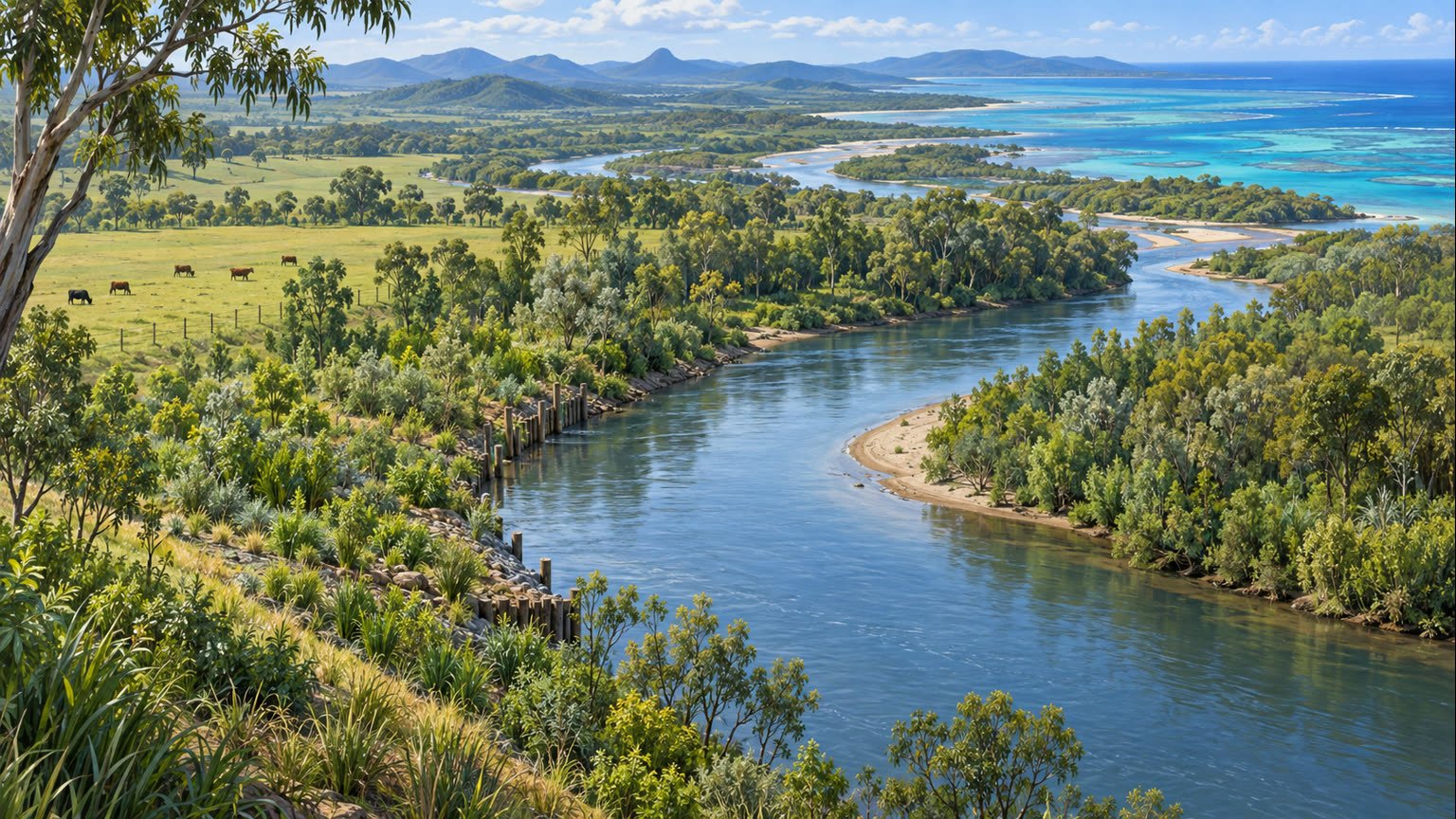
At 16 difficult sites, rows of untreated hardwood poles known as pile fields have been installed to slow water and trap sediment while vegetation re-establishes. The committee told ABC Rural the structures are preventing an estimated 27,000 tonnes of fine sediment each year from reaching reef waters.
The 310-kilometre Mary River flows into the Great Sandy Strait at the southern end of the Great Barrier Reef. Restoration groups say continued investment is needed because severe floods can still strip farmland and send sediment over seagrass habitat used by fish, turtles and dugongs.
Source: ABC Rural report.
Image disclosure: The featured image is an AI-generated conceptual editorial illustration. It is not a photograph of a specific Mary River project site.