

Varroa mite has been confirmed in two managed honey-bee hives in Far North Queensland, extending the known reach of the destructive parasite farther north than any previous Australian detection.
The confirmed finds were recorded on September 7 at El Arish and Cardwell, communities south of Cairns. Authorities were also investigating a third suspected detection near Innisfail.
Varroa mites weaken honey bees by feeding on them and can spread viruses through colonies. The pest is regarded as one of the most serious threats to managed bees and the pollination services on which many crops depend.
Biosecurity Queensland is asking beekeepers to inspect their colonies regularly and report suspicious findings through the national Bee 123 system. Beekeepers should follow current movement and surveillance directions published by the Queensland Government.
The affected hive owners have been working with authorities, and the identified hives were destroyed at the beekeepers’ discretion. Surveillance will help determine whether the detections are isolated or part of a wider spread.
Source: ABC Rural reporting and current Business Queensland biosecurity guidance.
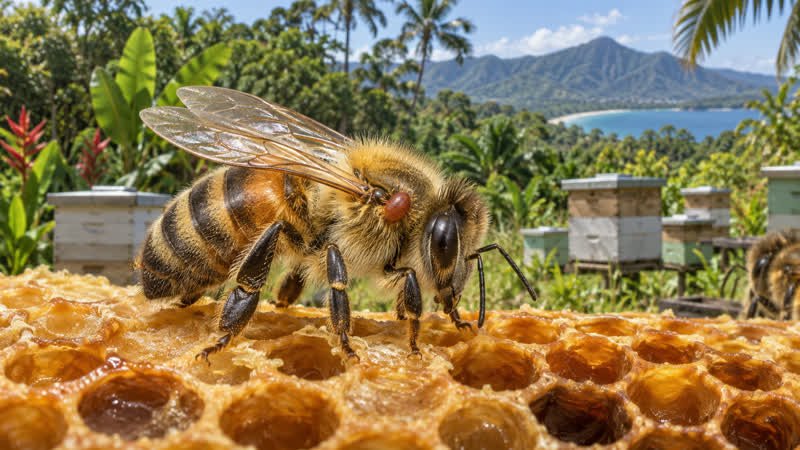
Illustration disclosure: The featured image is an AI-generated scientific editorial illustration. It is not a photograph of the reported hives or detections.